 Viktar Patotski ·
· Architecture
· 6 min read
Viktar Patotski ·
· Architecture
· 6 min read
Single-Tenant vs Multi-Tenant: The Decision Is Usually Both
The question is not which one wins, it is where you draw the isolation boundary. Here is how single and multi-tenant differ on cost, isolation, compliance, and ops, and why most SaaS that scales ends up running both at once.
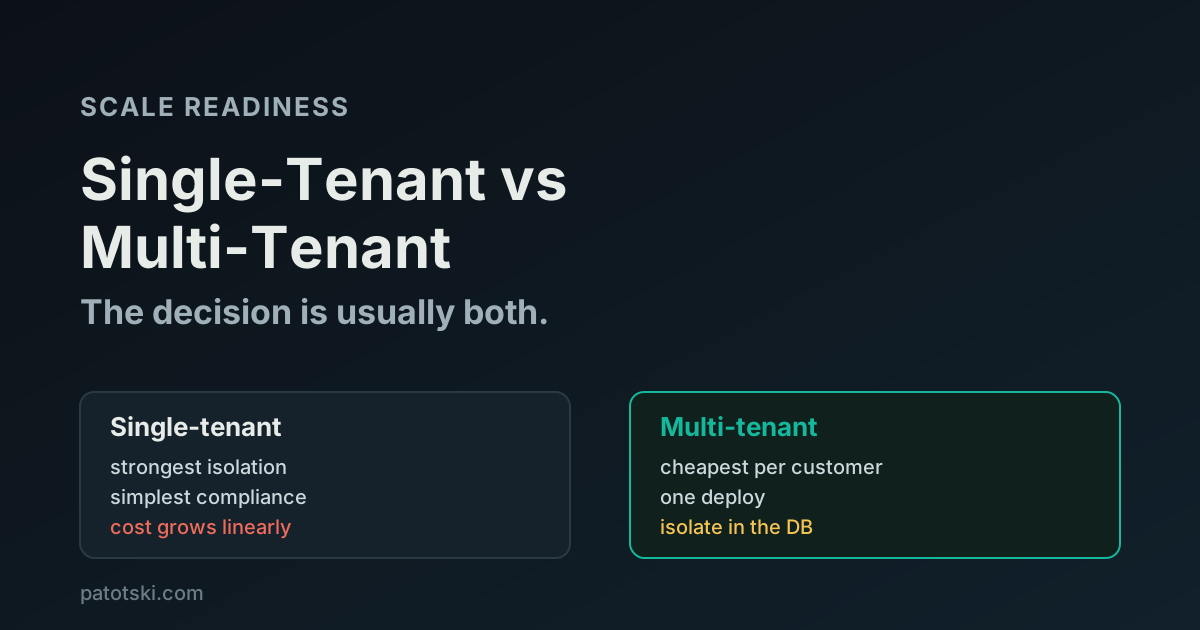
TL;DR - Single-tenant means each customer gets a dedicated instance. Multi-tenant means customers share one instance, separated in software. The honest answer for a growing SaaS is rarely one or the other:
- Multi-tenant is cheaper per customer, scales sublinearly, and is one codebase to deploy. Isolation is logical, so it has to be enforced well.
- Single-tenant is the strongest isolation and the simplest compliance story, but cost and ops grow in a straight line with your customer count.
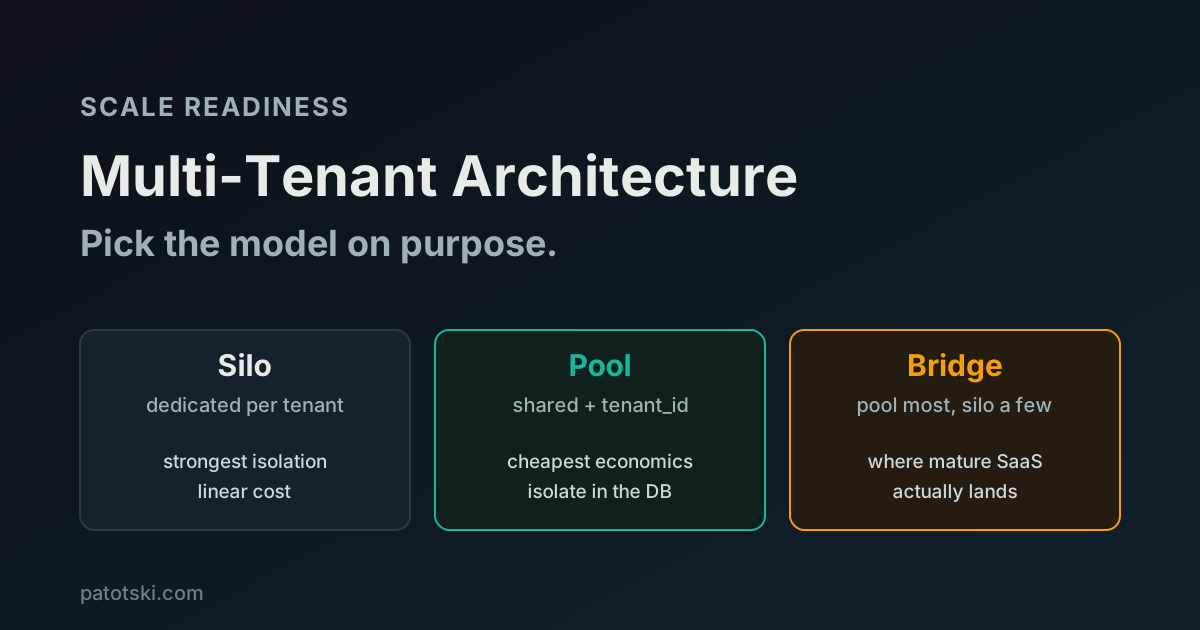
- Most SaaS that scales runs both: small and mid-market customers pooled for cheap unit economics, enterprise and regulated customers isolated. That hybrid is the bridge model, and it is a feature, not a compromise.
Pick multi-tenant as the default. Reach for single-tenant per customer when a specific compliance, isolation, or workload need justifies the cost.
First, the word
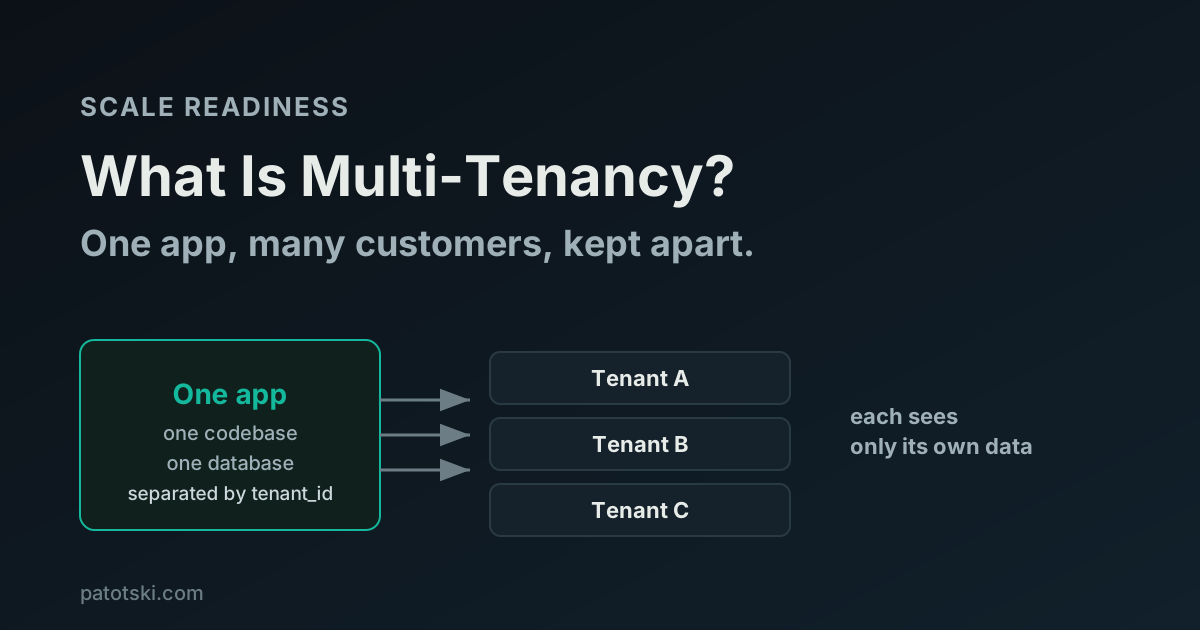
A tenant is one customer of your SaaS: a company, a team, or an account, together with all of its users and its data. Sell one product to a hundred businesses and you have a hundred tenants living inside the same application. The single-vs-multi question is about how far you separate one tenant’s data and compute from the next: a dedicated instance each, or shared infrastructure with the separation enforced in software.
It is a boundary, not a binary
People frame this as a versus, as if you must commit the whole company to one model. You do not. The real question is where the isolation boundary sits, and the answer can differ per customer tier. A free user and a regulated enterprise account do not need the same isolation, and charging yourself dedicated-infra costs for the free user to match the enterprise one is how margins die.
So read the comparison below not as “which do I pick” but as “which driver pushes which customer toward which side.”
The comparison that matters
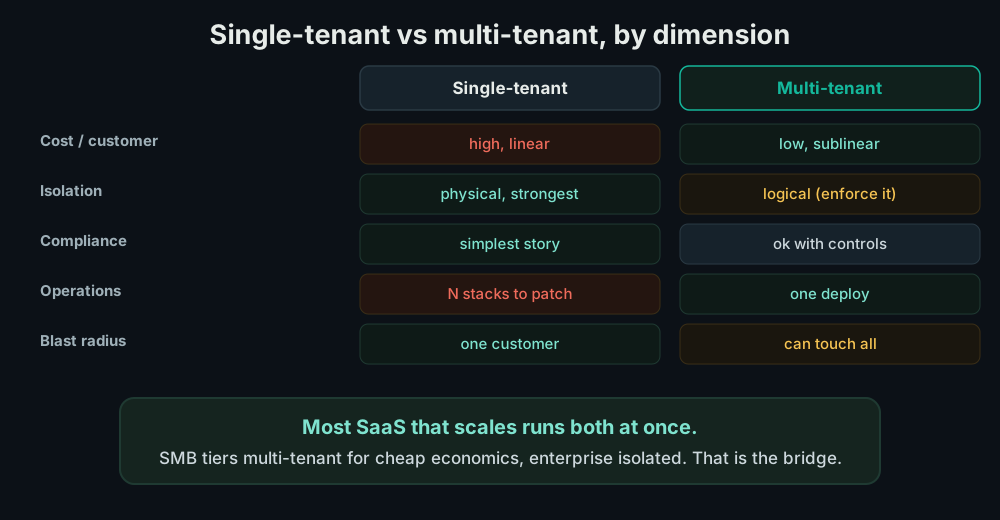
| Dimension | Multi-tenant | Single-tenant |
|---|---|---|
| Cost / customer | Low, sublinear (shared resources) | High, grows linearly with customer count |
| Isolation | Logical (tenant_id, enforced in software) | Physical, dedicated infra, strongest |
| Compliance | Accepted under SOC 2 / HIPAA with controls | Simplest data-residency and access story |
| Operations | One instance to deploy and monitor | N stacks to patch, deploy, and watch |
| Customization | Config over code, shared roadmap | Per-customer divergence is possible |
| Blast radius | A bug can touch all tenants | Contained to one customer |
Cost is the dimension that usually decides the default. Multi-tenant shares the database, the compute, and the operational effort across everyone, so adding a customer is close to free. Single-tenant provisions dedicated infrastructure per customer, so your bill and your ops load climb in a straight line. For a high-volume, lower-price product, single-tenant economics simply do not work.
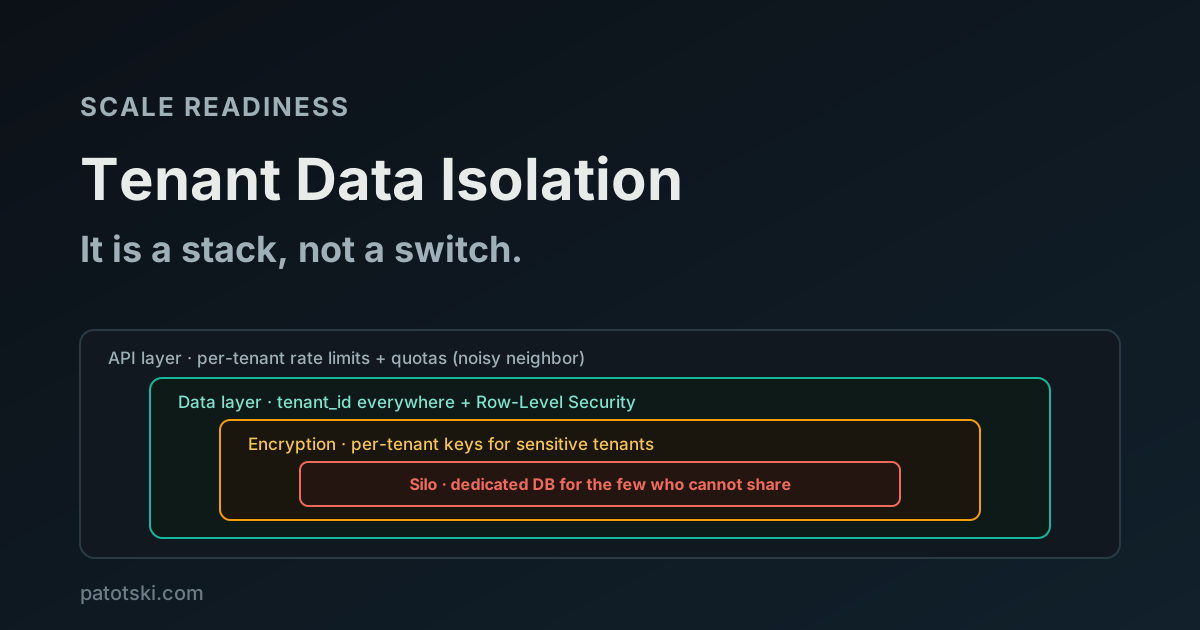
Isolation and compliance are what pull specific customers the other way. Dedicated infrastructure removes whole classes of cross-tenant risk and makes data-residency and access-control stories trivial to tell an auditor. A regulated enterprise customer may require it by contract. Multi-tenant is perfectly acceptable under SOC 2, HIPAA, ISO 27001, and PCI DSS, but only when you have implemented and can prove the isolation controls (the kind of work I cover under Security & Compliance).
Operations cuts against single-tenant as you grow. One multi-tenant deploy updates everyone. Fifty single-tenant stacks mean fifty places a migration can fail and fifty environments to monitor. Small teams feel this fast.
If you are on the other side, the customer evaluating a SaaS vendor, the same table applies in reverse: single-tenant buys you isolation and configuration freedom at a higher price, multi-tenant buys you lower cost and faster updates. Demand single-tenant when your compliance requires it, not as a reflex.
Why the answer is usually both
The pattern that survives contact with real customers is the hybrid: run your free, self-serve, and SMB tiers on shared multi-tenant infrastructure to keep unit costs low, and give enterprise or regulated customers a dedicated schema, database, or cluster. The application tier stays shared and cheap to operate, while the data tier provides the isolation boundary where a specific customer needs it.
Data locality forces the same shape even when nothing else does. The moment one customer requires their data to live in the EU, or an Australian government client requires it onshore, that data cannot sit in your one pooled US database. Those tenants get a dedicated or regional deployment, everyone else stays pooled, and you are running a hybrid whether you planned one or not. Better to plan it.
This is the bridge model, and it is the most commonly adopted shape for SaaS serving a mix of customer sizes. It lets your pricing match your cost: the customers who pay enterprise money to get isolation are the ones who fund it, and the customers who pay little run on infrastructure that costs little.
How to decide per customer
- Default everyone to multi-tenant. It is cheaper, simpler to operate, and good enough for the large majority of customers.
- Move a customer to single-tenant when a real need pays for it: a binding compliance or data-residency requirement, a contractual isolation clause, or a workload so heavy it would degrade the shared environment.
- Price the isolation. Single-tenant costs you linearly, so it belongs in your enterprise tier, not your default plan.
The traps
Single-tenant out of vague caution. “Dedicated is safer” is true and usually not worth the margin hit for customers who never asked for it. Every tenant you isolate without a paying reason is margin you set on fire.
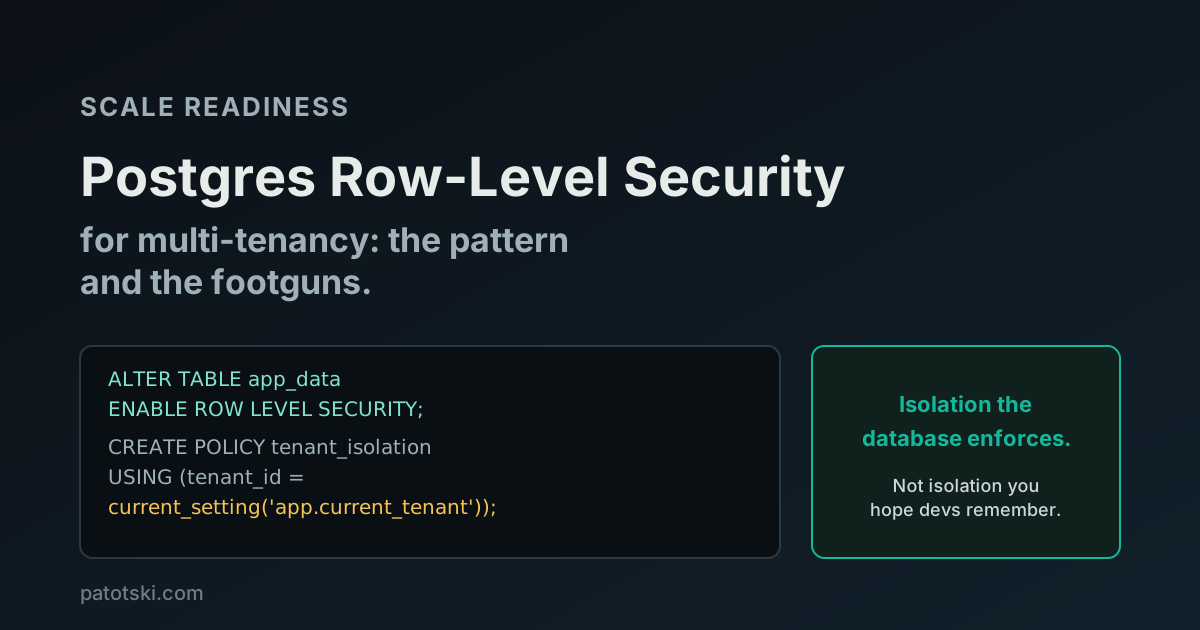
Multi-tenant with isolation only in application code. If the only thing
between two tenants is a WHERE clause every developer must remember, you are
one code review miss away from a cross-tenant incident. Enforce the boundary in
the database, not in habits.
Selling isolation you did not price. An enterprise deal lands, the contract demands a dedicated environment, and it gets provisioned at pooled-tier pricing. The linear cost is now yours. If a customer needs single-tenant, the enterprise tier pays for it.
Summary
Single-tenant and multi-tenant are not rivals, they are two ends of an isolation spectrum you can apply per customer. Multi-tenant is the cheaper, simpler default and is compliant with the right controls. Single-tenant is the strongest isolation and the cleanest compliance story, at a cost and ops burden that scale linearly. Run multi-tenant by default, isolate the customers whose compliance or workload justifies it, and price that isolation into your enterprise tier. That hybrid is where durable SaaS economics live.
This decision sits inside the larger tenancy-model choice. For the full silo/pool/bridge picture and how each maps to a real database, see multi-tenant architecture for vertical SaaS. For handling growth once you are pooled, see the database scaling ladder.
Trying to decide where your isolation boundary should sit? I do this as part of Scale Readiness. Book a free 30-minute call and we will map your tiers to a model that keeps both your auditors and your margins happy.