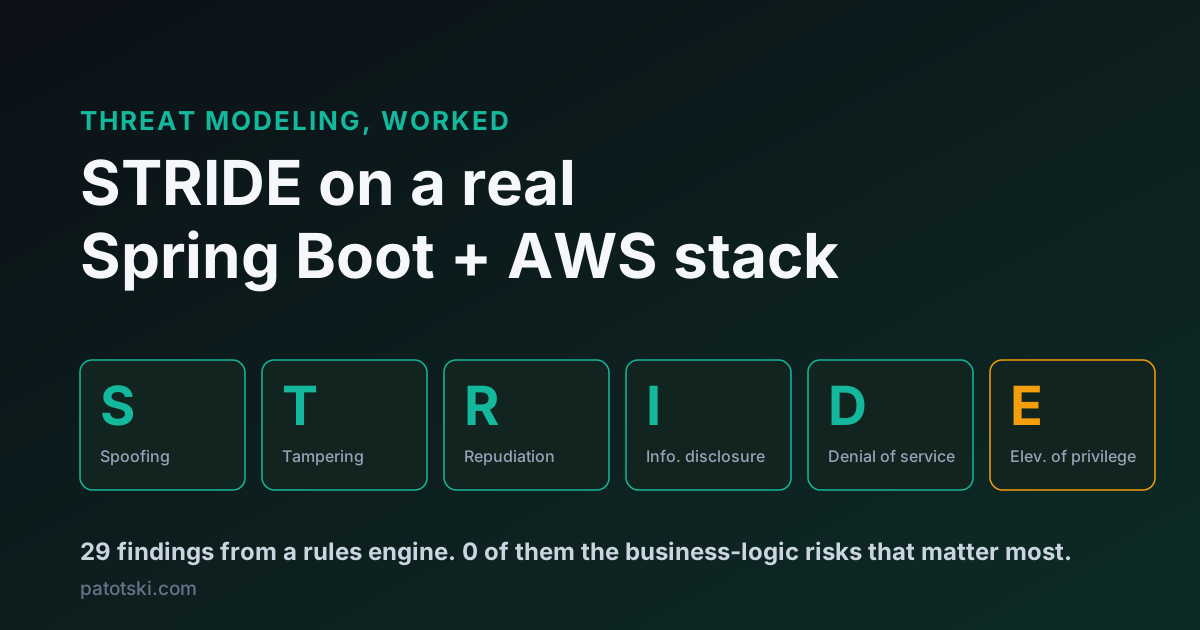

Threat Modeling Example: STRIDE on a Real AWS Stack
A worked STRIDE threat modeling example on a real AWS stack: the filled-in matrix, 29 findings, and the two categories that came back completely empty.
A worked STRIDE threat modeling example on a real AWS stack: the filled-in matrix, 29 findings, and the two categories that came back completely empty.
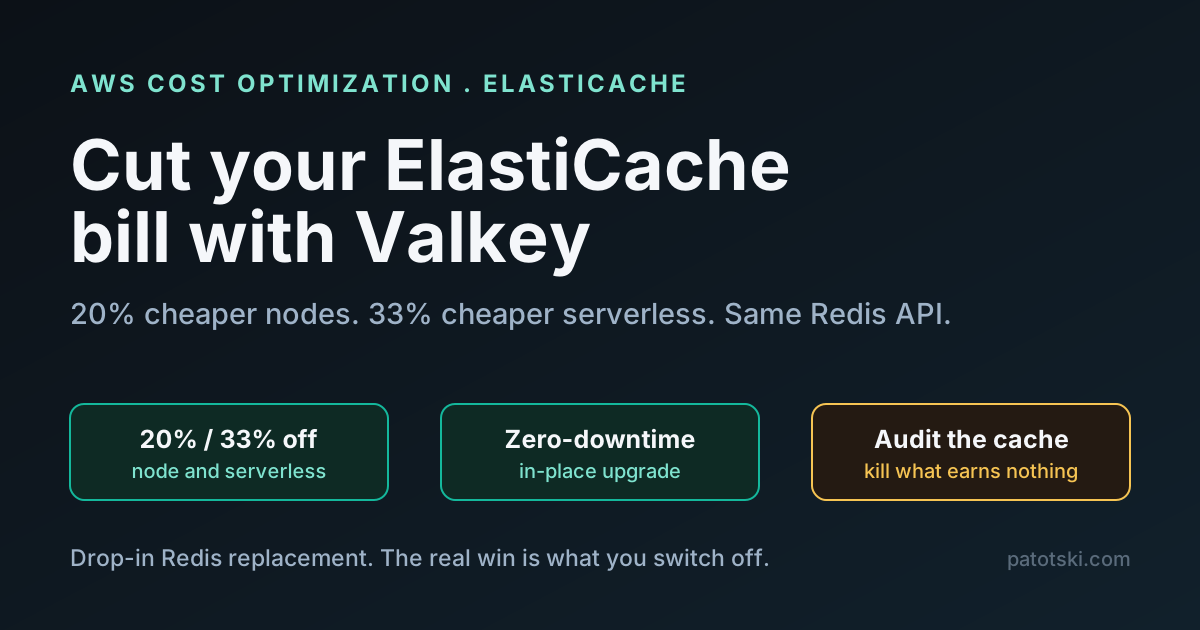
Valkey is 20% cheaper than Redis on nodes, 33% cheaper on serverless, and the only ElastiCache engine eligible for a Database Savings Plan. Wire-compatible, in-place upgrade. The bigger win is the audit it forces: what you are caching and what you can switch off.

Karpenter can take 20 to 40 percent off your EKS compute bill, more with Spot, without refactoring a line of app code. Why it beats Cluster Autoscaler, the audit sequence to roll it out safely, and the gotchas that quietly cost people money.

Turning on RDS encryption satisfies the compliance question and stops almost none of the attacks that actually leak data. Here is what each layer of encryption at rest really defends against, on Postgres and AWS, and how to build the one that protects the sensitive field.

Environment variables are where secrets go to leak. Here is how to get them out, what each store actually buys you (and costs), and how to wire it into a Spring app without calling an API on every request.

Do Java virtual threads make a Spring Boot app faster? I load-tested the same app both ways on real AWS hardware. The honest answer: below saturation they do nothing, on CPU-bound work they do nothing, and where they win on blocking I/O, a properly tuned platform pool matches the throughput. The real case for virtual threads is not raw speed, it is having no pool to tune and a cheaper thread.